Setting
After Empire
Section titled “After Empire”The Empire was the only industrial superpower the world had known. At its height it spanned the continent — rail connected every major settlement, telegraph carried orders from a single capital, and its armies enforced a common law across the domain.
It collapsed within living memory. The infrastructure survived: the rail lines, the steamworks, the smelters. But the political order that built them is gone, and nothing has replaced it at the same scale.
The Flower That Changed Everything
Section titled “The Flower That Changed Everything”
Atropa gaeatrix grows only in the caldera of an ancient volcano. In its raw form, an unremarkable plant. Refined, its nectar becomes “flux”: a substance that enables magic.
Within decades, flux transformed from a regional curiosity into the most consequential resource in the known world. Schools of practice formed around different domains of effect. Demand outstripped what the caldera could produce. And the single geographic fact — that Atropa gaeatrix grows in one place and nowhere else — became the axis on which civilization turned.
The Fracture
Section titled “The Fracture”The Empire’s power rested on industrial advantages: walls that held, borders that could be enforced, supply lines that could be defended. Magic undid all of it. A trained practitioner could pass through fortifications, move unseen across controlled territory, or disable infrastructure that took years to build. The Empire’s monopoly on violence — the foundation of any state — simply stopped being a monopoly.
For a time, the Empire held because it controlled the flux supply. Every dose refined, every practitioner trained, every school chartered — all flowed through imperial authority. But control over a single resource is only as strong as the supply chain that delivers it. When peripheral provinces began refining flux independently, the centre lost its only leverage. Authority didn’t erode gradually. It broke.
Emergence of City-States
Section titled “Emergence of City-States”What survived the Fracture was whatever didn’t depend on the Empire’s reach. Three settlements at the caldera rim — each built around a mountain pass into the volcanic interior — found themselves holding the only thing that mattered: direct access to the caldera where the flower grows.
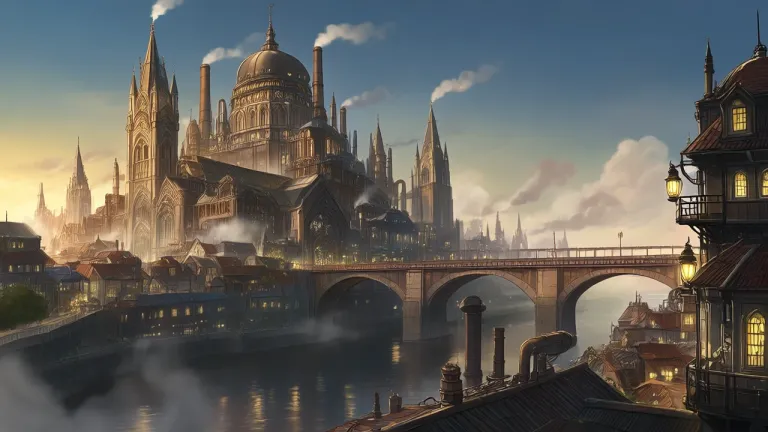
They didn’t choose to become city-states. They simply were the places that didn’t need supply lines, didn’t need imperial authority to function, and couldn’t be starved of the one resource civilization now required. Everything else — governance, trade, law — organized around that fact.